How to Start The 1000 Hours Outside Challenge

How to Start the 1000 Hours Outside Challenge with Kids (Beginner Guide)
Starting something new as a family can feel exciting and intimidating at the same time. If you’ve heard about the 1000 Hours Outside and felt inspired but also unsure where to begin, you’re not alone.
The good news? This challenge is one of the most flexible, forgiving habits you can build with your kids.
You don’t need special gear, elaborate plans, or a perfect schedule. You just need to start where you are.
Here’s how to begin in a way that actually works for real families.
When to Start (Any Time of Year!)
One of the biggest misconceptions is that you have to start this challenge on January 1st.
You don’t.
You can start:
In the middle of summer
During a busy school year
When your kids are toddlers or teenagers
Even halfway through the year
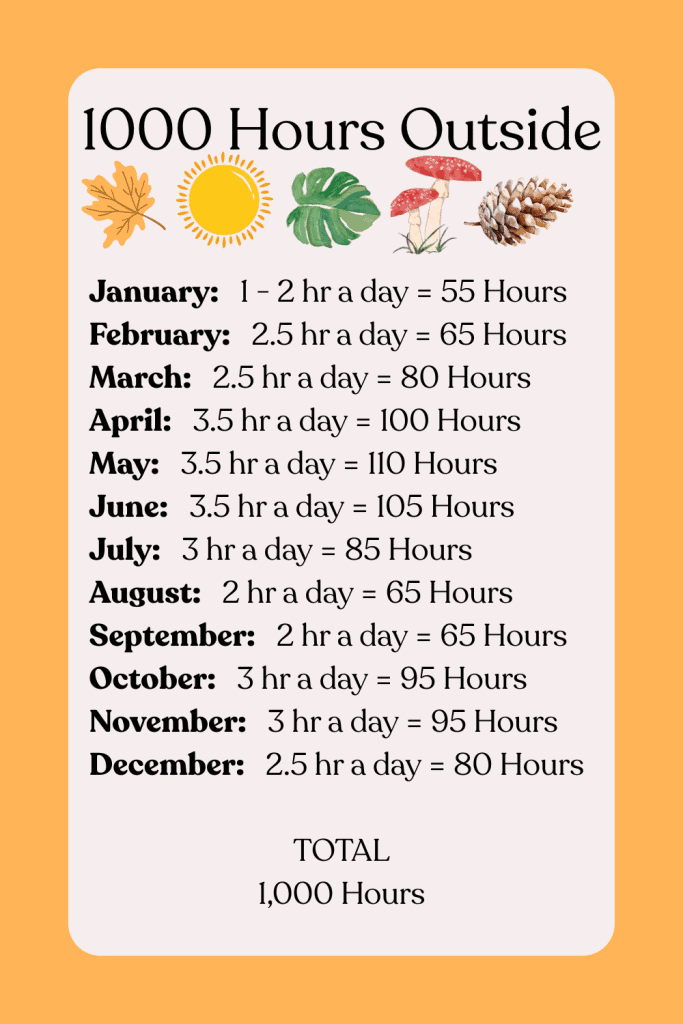
Some families track January–December. Others start on a birthday, the first day of spring, or the start of summer break. The point isn’t the calendar—it’s the habit.
If “1,000 hours” feels overwhelming, give yourself permission to simply aim for more time outside than before. You can always decide later how formally you want to track it.
Setting Expectations by Age
Outdoor time looks different depending on your kids’ ages, and adjusting expectations makes all the difference.
Toddlers & Preschoolers
Outdoor time happens naturally
Short bursts add up fast
Backyard play, walks, and even sitting outside count
Elementary-Age Kids
Independent outdoor play starts to shine
After-school outside time works well
Parks, bikes, scooters, and free play are ideal
- Remember, play time at school, and P.E. also count
Tweens & Teens
Outdoor time may look quieter
Sitting outside reading or listening to music still counts
Walks, sports, and hanging out outside with friends all matter
- Eating outside
The goal isn’t to force kids into nature, it’s to normalize being outside as part of daily life.
How to Track Hours Simply (Without Stress)
Tracking should support the habit, not become another chore.
Some simple options:
A printable chart you fill in weekly
A running note on your phone
Rounding to the nearest half hour
Tracking as a family instead of per child
Many families don’t track daily at all; they estimate weekly or monthly. That’s perfectly fine.
Remember: this is not schoolwork. No one is grading you.
Common Beginner Mistakes (and How to Avoid Them)
1. Thinking Outdoor Time Has to Be “Special.”
It doesn’t. Ordinary, everyday time outside counts the most. Going on a walk, eating outside, and talking with friends outside all count.
2. Waiting for Perfect Weather
Cold, cloudy, windy, or muddy days still count. Kids often remember those days the most.
3. Trying to Be Consistent Every Single Day
Some days you’ll be outside a lot. Other days you won’t. Zoom out to see the bigger picture.
4. Turning It Into Another Thing to “Succeed” At
This challenge works best when it feels like an invitation, not a requirement.
A Gentle Way to Start This Week
If you want a simple place to begin:
Go outside after school instead of turning on screens
Eat one snack or meal outside
Let your kids play while you sit nearby
That’s it. No pressure. Just presence.
Why Being Outside Counts Even If You’re “Not Doing Anything”
If you’ve ever thought, “This doesn’t really count, we’re just sitting here,” this part is for you.
One of the most freeing parts of spending more time outside is realizing that being outside doesn’t have to look productive to be valuable.
In fact, some of the most meaningful outdoor time happens when nothing is planned at all.
Unstructured Outdoor Time Is Not Wasted Time
We live in a world that constantly pushes productivity, even in childhood. It’s easy to feel like outdoor time needs to be:
Educational
Active
Creative
Intentional
But kids don’t need every moment to be optimized.
Unstructured outdoor time allows kids to:
Daydream
Notice small details
Move at their own pace
Reset emotionally
Nature already does the work; you don’t need to manage it.
Sitting, Reading, and Watching Clouds Still Counts
Let’s say your kids are:
Sitting on the porch
Lying in the grass
Reading outside
Watching clouds drift by
Talking… or not talking at all
That counts.
Even if:
They’re bored
They’re quiet
They’re doing “nothing.”
Especially then.
These moments help kids learn how to be comfortable without constant stimulation, and that’s a powerful life skill.
Releasing the Pressure to Be “Productive”
Many parents feel guilty about how their kids spend their time, especially if it doesn’t look impressive or Instagram-worthy.
Here’s your permission slip:
Outdoor time doesn’t have to be athletic
It doesn’t have to be creative
It doesn’t have to involve learning outcomes
Being outside is enough.
When parents let up the pressure, kids often stay out longer, play more freely, and ask to go out again the next day.
Why This Matters for Overwhelmed Parents
If you’re tired of:
Planning activities
Entertaining your kids
Feeling like you’re falling short
This mindset shift can be a relief.
You don’t need to do more.
You just need to open the door.
The Quiet Magic of “Nothing”
Some of the most memorable childhood moments aren’t the big outings, they’re the quiet ones:
Sitting in the driveway
Lying on a blanket
Wandering with no destination
Those moments don’t look productive, but they build calm, creativity, and connection.
And yes… they count.
READ: WHAT IS THE 1000 HOURS OUTSIDE CHALLENGE
READ: HOW TO GET YOUR 1000 HOURS
Pin How to Start The 1000 Hours Outside Challenge: