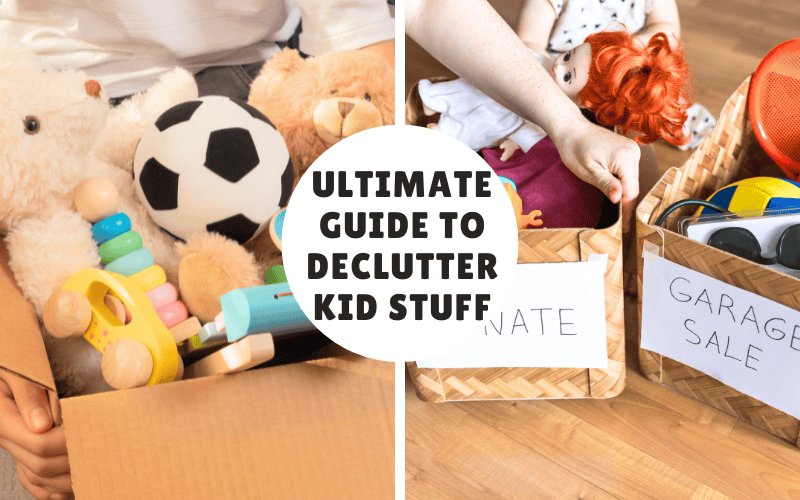
Kid Stuff To Declutter In The New Year

The New Year is the perfect time to reset, especially when it comes to kids’ stuff. Toys, clothes, school papers, and random little treasures have a way of piling up faster than we realize.
After birthdays and holidays, it’s common for kids’ spaces to feel cluttered and overwhelming.
What to Declutter for Kids in the New Year (A Complete Guide for Parents)
Decluttering kids’ items in the New Year isn’t about getting rid of everything. It’s about creating space for what your child actually uses, loves, and needs as they grow.
This guide will walk you through everything kids tend to accumulate, what to declutter, and how to make the process easier (and less emotional) for everyone involved.
GET YOUR FREE DECLUTTER CHECKLIST AT THE END OF THIS POST

Clothes, Shoes, and Accessories to Declutter
Kids outgrow clothes constantly, which makes this one of the easiest places to start.
Declutter:
Clothes that no longer fit
Seasonal clothes that are worn out or stained
Socks with missing matches
Shoes that pinch, rub, or are too small
Dress-up clothes that are torn or uncomfortable
Accessories they never choose (hats, scarves, belts)
Tip: Try everything on at once. If it doesn’t fit right now, it goes.
To begin, clothing is often the easiest place to start because the decisions are usually clear. Instead of pulling everything out at once, try working in small batches, one drawer or one clothing type at a time.
As you go, focus on what fits your child right now, not what might fit someday. If something is uncomfortable, rarely worn, or clearly outgrown, it’s safe to let it go. This quick win can build momentum and make the rest of the decluttering process feel far less overwhelming.

Toys to Declutter in the New Year
Toys tend to multiply quickly, especially after the holidays.
Declutter:
Broken or missing-piece toys
Toys your child never plays with
Loud or annoying toys no one enjoys
Toys meant for a younger age
Duplicate toys (how many toy cars or dolls do they really need?)
Party favors and small plastic toys
Toys that cause frustration instead of fun
Tip: Rotate toys instead of keeping everything out at once. Fewer toys often lead to better play.
Next, when it comes to toys, less truly is more. Rather than tackling the entire toy collection in one go, start with the toys your child consistently ignores.
If they haven’t been chosen in weeks, they likely won’t be missed. Additionally, involving your child by letting them pick a few favorites to keep can help prevent pushback. Keeping the focus on making space for better play, not taking things away, can make this step feel more positive for everyone.

Books and Reading Materials
Books are wonderful, but kids can still outgrow them.
Declutter:
Baby books your child no longer reads
Books they’ve lost interest in
Damaged or torn books
School reading books from previous years
Duplicate books
Tip: Keep favorites and donate the rest to schools, libraries, or friends with younger kids.
Moving on to books, this is a great opportunity to refresh your child’s reading space. As children grow, their interests and reading levels change, and that’s perfectly normal.
Try sorting books into simple piles: favorites, maybe, and ready to pass along. By keeping only books your child genuinely enjoys or still reads, you make it easier for them to find and appreciate what’s left, which often leads to more reading, not less.

Arts, Crafts, and Creative Supplies
Craft supplies can easily turn into clutter if left unchecked.
Declutter:
Dried-out markers and pens
Broken crayons
Half-used kits missing supplies
Crafts your child never finished
Excess paper scraps
Old stickers they no longer like
Tip: Store only what you can realistically use in the next few months.
Similarly, craft supplies can quickly become cluttered if they aren’t checked regularly. Instead of organizing everything first, start by removing what’s clearly unusable: dried markers, broken crayons, and incomplete kits.
This alone can dramatically reduce the mess. Once you’ve edited the supplies, you’ll likely find that organizing what remains feels much more manageable and far less time-consuming.

School Papers, Artwork, and Keepsakes
This is often the most emotional category for parents.
Declutter:
Old worksheets and homework
Duplicates of similar artwork
School projects from past years
Test papers and graded assignments
Participation certificates
Tip: Take photos of special artwork and keep a small memory box for each child.
At the same time, school papers and artwork can feel emotionally heavy, which is why it helps to approach this category gently.
Rather than saving everything, focus on keeping a few meaningful pieces from each year. Taking photos of artwork before recycling it lets you preserve the memory without the physical clutter. By setting clear limits, you protect both your space and your peace of mind.

Games, Puzzles, and Activity Sets
These items often sit unused once pieces go missing.
Declutter:
Puzzles with missing pieces
Board games missing instructions or parts
Games your kids never ask to play
Toddler games your child has outgrown
Tip: If it can’t be played today, it doesn’t need to be kept.
As you continue, games and puzzles are a category where practicality matters most. If a game can’t be played easily because pieces are missing, it’s likely causing more frustration than fun.
Instead of feeling guilty, remind yourself that keeping broken games doesn’t serve your child. Letting go of these items clears space for activities your family actually enjoys together.

Sports Gear and Outdoor Toys
Kids’ interests change quickly, and so does their equipment.
Declutter:
Sports gear for activities they no longer do
Outgrown helmets, pads, or cleats
Broken outdoor toys
Duplicates of balls, scooters, or ride-on toys
Tip: Donate gently used sports gear to younger kids or local teams.
Meanwhile, sports gear and outdoor toys often linger long after interests have changed. To simplify this step, ask yourself one question: “Are we actively using this?”
If the answer is no, it may be time to pass it along. Donating gently used equipment can feel especially good, knowing another child can benefit from it while you reclaim valuable storage space.

Stuffed Animals and Comfort Items
This category can be tricky, especially for younger kids.
Declutter:
Stuffed animals no one sleeps with or plays with
Duplicates of the same character
Damaged or dirty plush toys
Tip: Let kids choose a small “keep” group and donate the rest together.
When it comes to stuffed animals, it’s helpful to set a clear boundary from the start. Rather than deciding item by item, choose a specific number that your child can keep.
This approach removes decision fatigue and gives kids a sense of control. Often, once favorites are chosen, the rest are easier to part with than expected.

Bedroom and Closet Extras
Kids’ rooms often hide random clutter.
Declutter:
Old nightlights or lamps
Broken furniture
Decorations they’ve outgrown
Random items that don’t belong in the bedroom
Tip: Every item in a child’s room should serve sleep, play, or comfort.
Additionally, decluttering bedroom extras can instantly make a room feel calmer. Focus on removing items that don’t support rest or play, such as broken furniture or decorations your child has outgrown.
By simplifying the space, you create an environment that’s easier to maintain and more inviting for your child.

Bathroom and Personal Items
Kids grow out of these quickly too.
Declutter:
Outgrown toothbrushes and hair accessories
Bath toys with mold or cracks
Old lotions, soaps, and samples
- Products your child dislikes or won’t use
Likewise, bathroom items are best tackled quickly and efficiently. Start by tossing anything clearly expired, outgrown, or disliked.
Since these items are used daily, keeping only what your child actually uses can make routines smoother and faster, a small change that can have a big impact on busy mornings.

Digital Clutter for Kids
Digital clutter counts too.
Declutter:
Unused apps or games
Old photos and screenshots
Unwatched shows or downloads
Games that cause frustration or overstimulation
Tip: Set simple limits and refresh content at the start of the year.
Finally, don’t forget about digital clutter. Although it’s less visible, it can be just as overwhelming. Begin by deleting unused apps and games together, explaining that fewer choices often lead to better experiences.
Setting aside a short amount of time for this task helps keep it from feeling endless, while still giving your child a fresh digital reset for the New Year.

Tips for Decluttering Kids’ Stuff in the New Year
Start small: One category or one room at a time
Declutter together: Let kids help when appropriate
Use clear limits: Containers help define how much stays
Focus on now: Keep items that fit your child’s current stage
Donate quickly: Don’t let bags sit around
Decluttering kids’ items in the New Year sets the tone for a calmer, more organized year ahead. Less clutter makes it easier for kids to play, focus, and enjoy their space, and it makes daily life easier for parents, too.
A fresh start doesn’t require perfection. It just requires intention.

CLICK HERE TO DOWNLOAD THE DECLUTTER CHECKLIST PDF

Check Out Some Fun Crafts: