
Ultimate Guide To Declutter Kid Stuff
What to Declutter for Kids (A Complete Guide for Parents)
Kids’ stuff has a way of piling up quickly. Between toys, clothes, school papers, crafts, and random little treasures, it can sometimes feel like clutter is taking over every corner of the house.
The good news is that decluttering kids’ items does not have to be stressful or extreme. In fact, simplifying your child’s spaces can make daily life easier for everyone. Fewer items often mean easier cleanups, calmer rooms, less overwhelm, and more room for the things your kids truly use and enjoy.
Most importantly, you do not need to tackle everything in one weekend. Small steps add up quickly. This guide will walk you through what to declutter in every major category of kid clutter, along with simple tips to make the process feel manageable.
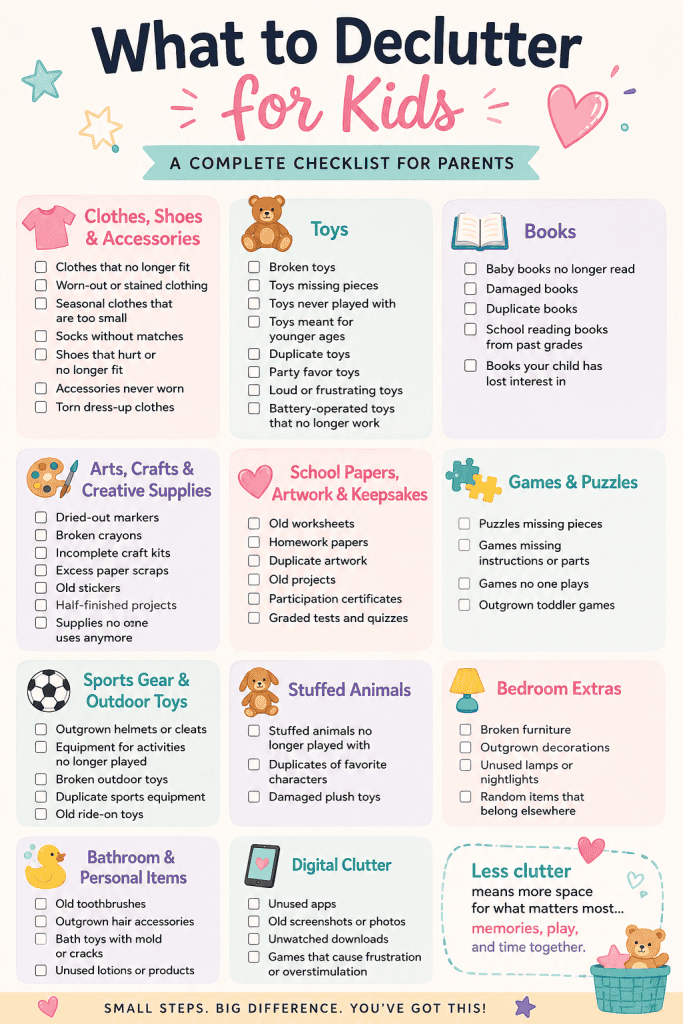
Clothes, Shoes, & Accessories
Children outgrow clothing faster than almost anything else in the home. Because of that, this is usually one of the easiest places to begin.
What to Declutter
- Clothes that no longer fit
- Worn-out or stained clothing
- Seasonal clothes that are too small
- Socks without matches
- Shoes that hurt or no longer fit
- Accessories never worn
- Torn dress-up clothes

Easy Decluttering Tips
To begin, avoid pulling every piece of clothing out at once. Instead, focus on one small area, such as a single drawer or one clothing category at a time. As you sort, pay attention to what your child actually reaches for regularly. If something is uncomfortable, too small, or constantly skipped over, it may be time to let it go. Little by little, these small decisions create a closet that feels far easier to manage.
Minimizing The Toys
Toys are often the biggest source of clutter in a child’s room. However, more toys do not always mean better play.
What to Declutter
- Broken toys
- Toys missing pieces
- Toys that are never played with
- Toys meant for younger ages
- Duplicate toys
- Party favor toys
- Loud or frustrating toys
- Battery-operated toys that no longer work
Easy Decluttering Tips
Next, try starting with the easiest items first, such as broken toys or things your child has clearly outgrown. This helps build momentum without emotional stress. Additionally, consider using a toy rotation system instead of keeping every toy out all the time. When kids can actually see what they own, they often play more creatively and clean up more easily.
Decluttering Books
Books are wonderful to keep around, but children naturally outgrow certain stories and reading levels over time.
What to Declutter
- Baby books no longer read
- Damaged books
- Duplicate books
- School reading books from past grades
- Books your child has lost interest in
Easy Decluttering Tips
Meanwhile, make book decluttering feel positive by focusing on creating a cozy, usable reading space rather than simply removing books. Start by keeping favorites and books your child still enjoys. Then, donate the extras to libraries, schools, or younger friends. Often, children appreciate their remaining books even more once the shelves feel less crowded.
Decluttering Arts, Crafts, & Creative Supplies
Craft supplies tend to spread quickly throughout the house if they are not edited regularly.
What to Declutter
- Dried-out markers
- Broken crayons
- Incomplete craft kits
- Excess paper scraps
- Old stickers
- Half-finished projects
- Supplies no one uses anymore
Easy Decluttering Tips
Similarly, craft clutter becomes much easier to manage when you remove obvious trash first. Toss dried markers, broken pieces, and unusable supplies before organizing anything else. Once the excess is gone, you may discover you already have plenty of usable materials without needing additional storage bins or organizers.

School Papers, Artwork, & Keepsakes
This category can feel especially emotional because so many items hold memories.
What to Declutter
- Old worksheets
- Homework papers
- Duplicate artwork
- Old projects
- Participation certificates
- Graded tests and quizzes
Easy Decluttering Tips
At the same time, remember that you do not need to keep every single paper to preserve the memories. Instead, choose a few meaningful favorites from each school year. Taking photos of artwork before recycling it can also help reduce guilt. By setting small limits, such as one keepsake box per child, the process becomes far less overwhelming.
Games & Puzzles
Games and puzzles often linger long after pieces disappear.
What to Declutter
- Puzzles missing pieces
- Games missing instructions or parts
- Games no one plays
- Outgrown toddler games
Easy Decluttering Tips
As you sort through games, focus on whether the item can realistically be used today. If missing pieces make the game frustrating, it may no longer be worth keeping. Letting go of incomplete items creates more room for activities your family actually enjoys together.
Sports Gear & Outdoor Toys
Kids’ interests change quickly, which means sports gear often piles up over time.
What to Declutter
- Outgrown helmets or cleats
- Equipment for activities no longer used
- Broken outdoor toys
- Duplicate sports equipment
- Old ride-on toys

Easy Decluttering Tips
Additionally, this category becomes easier when you ask one simple question: “Are we currently using this?” If not, it may be time to pass it along. Donating gently used sports equipment can feel encouraging because another family may be able to use it right away.
Stuffed Animals
Stuffed animals can be difficult because they often carry emotional attachment.
What to Declutter
- Stuffed animals no longer played with
- Duplicates of favorite characters
- Damaged plush toys
Easy Decluttering Tips
Rather than making endless decisions one by one, try setting a simple limit ahead of time. For example, your child may choose which stuffed animals fit in a certain basket or on one shelf. Clear boundaries help reduce overwhelm while still allowing children to keep their favorites.
Bedroom Extras
Bedrooms tend to collect random clutter over time.
What to Declutter
- Broken furniture
- Outgrown decorations
- Unused lamps or nightlights
- Random items that belong elsewhere
Easy Decluttering Tips
Likewise, simplifying bedroom clutter can instantly make the space feel calmer. Focus first on removing anything that no longer supports sleep, comfort, or play. Even removing a few unused items can make a child’s room feel more peaceful and easier to maintain.

Bathroom & Personal Items
Bathroom clutter often goes unnoticed because the items are small.
What to Declutter
- Old toothbrushes
- Outgrown hair accessories
- Bath toys with mold or cracks
- Unused lotions or products
Easy Decluttering Tips
Fortunately, this category is usually quick to finish. Start by tossing anything expired, broken, or clearly unused. Since these items are used daily, simplifying bathroom storage can make everyday routines smoother and less stressful for both kids and parents.
Digital Clutter
Digital clutter counts too, especially for older kids.
What to Declutter
- Unused apps
- Old screenshots or photos
- Unwatched downloads
- Games that cause frustration or overstimulation
Easy Decluttering Tips
Finally, digital decluttering works best in short sessions. Instead of trying to organize every device at once, spend just a few minutes deleting unused apps or clearing out old files together. Reducing digital clutter can help screens feel calmer and more intentional, rather than overwhelming.
Simple Tips to Declutter Kids’ Stuff Without Getting Overwhelmed
Decluttering kids’ items does not have to happen all at once. In fact, little, consistent progress is often far more effective than trying to completely reset the entire house in one day.
Here are a few simple ways to make the process easier:
- Start with the easiest category first
- Work in short time blocks
- Focus on progress, not perfection
- Remove trash and broken items first
- Keep donation bags nearby
- Let kids participate when appropriate
- Declutter before organizing
Most importantly, remember that the goal is not a perfectly minimal home. The goal is to create spaces that feel functional, peaceful, and easier for your family to enjoy every day.
Even small amounts of decluttering can make a huge difference over time.
Read More:
1000 Hours Outside & Why It’s Awesome
